A land business on the side starts with research
 LandOSLists · Organize your research
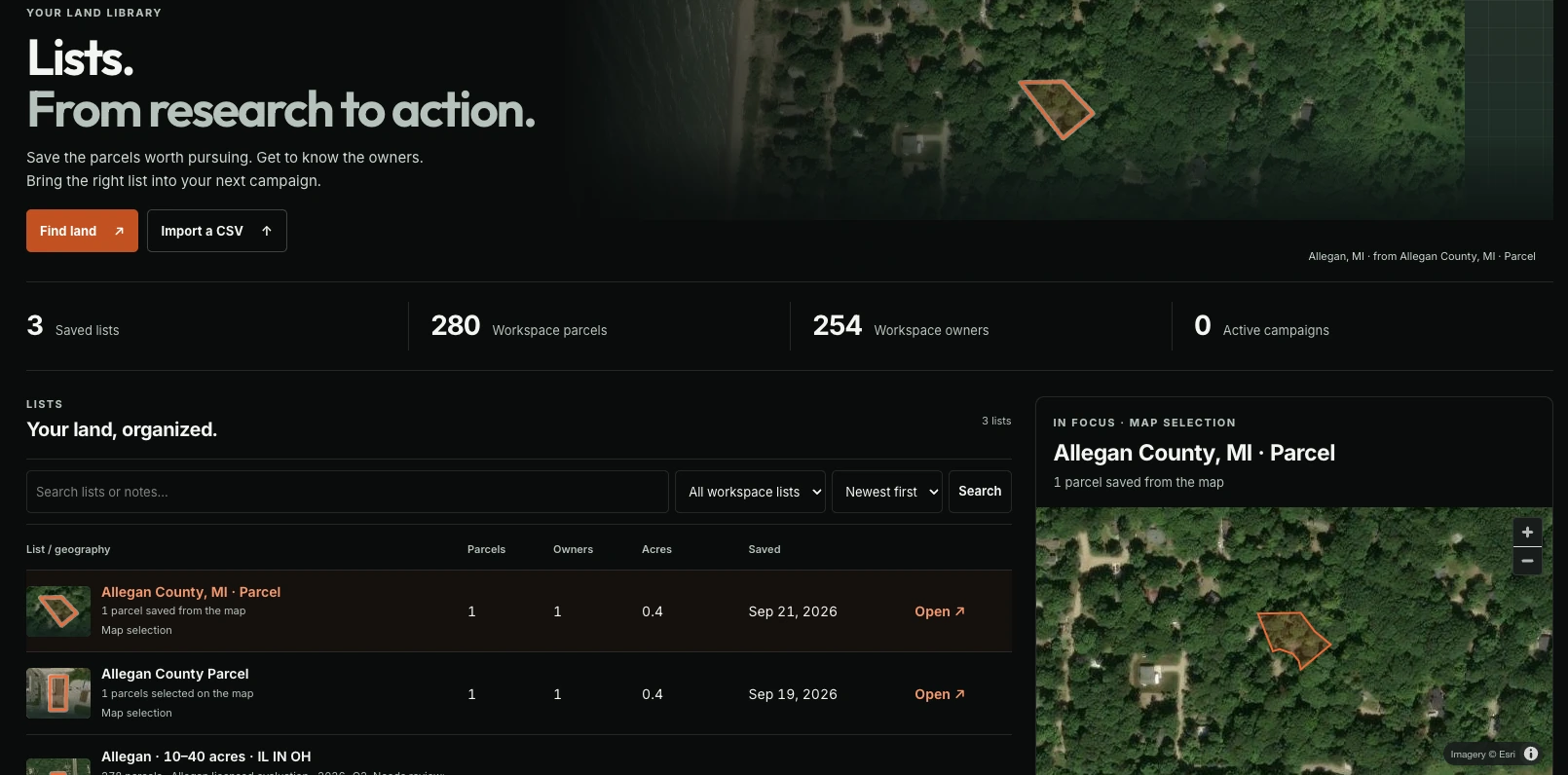
Want to start a side business in 2027? Land is worth learning about if you like tangible assets, patient research, and decisions you can explain.
The work starts well before a purchase. You identify a property, investigate what someone can do with it, estimate costs, and decide whether the opportunity deserves more time. Buying and reselling also requires capital, judgment, and a buyer. Software can help you organize the work. You still make the decisions.
Here is a four-week learning routine you can fit around other commitments. It is a practice schedule, not a deadline for closing a deal.
Week 1: Learn one place
Choose a county instead of jumping between markets every evening. Start with Allegan County, Michigan, and use our local research guide to find the records and offices you will need.
Pick one parcel and one intended use. Confirm the identifier and municipality. Create a short source list with the parcel viewer, planning authority, recorded-document source, and relevant site-evaluation office.
Finish the week with: a parcel you can identify correctly and a list of questions worth answering.
LandOSMap · Allegan County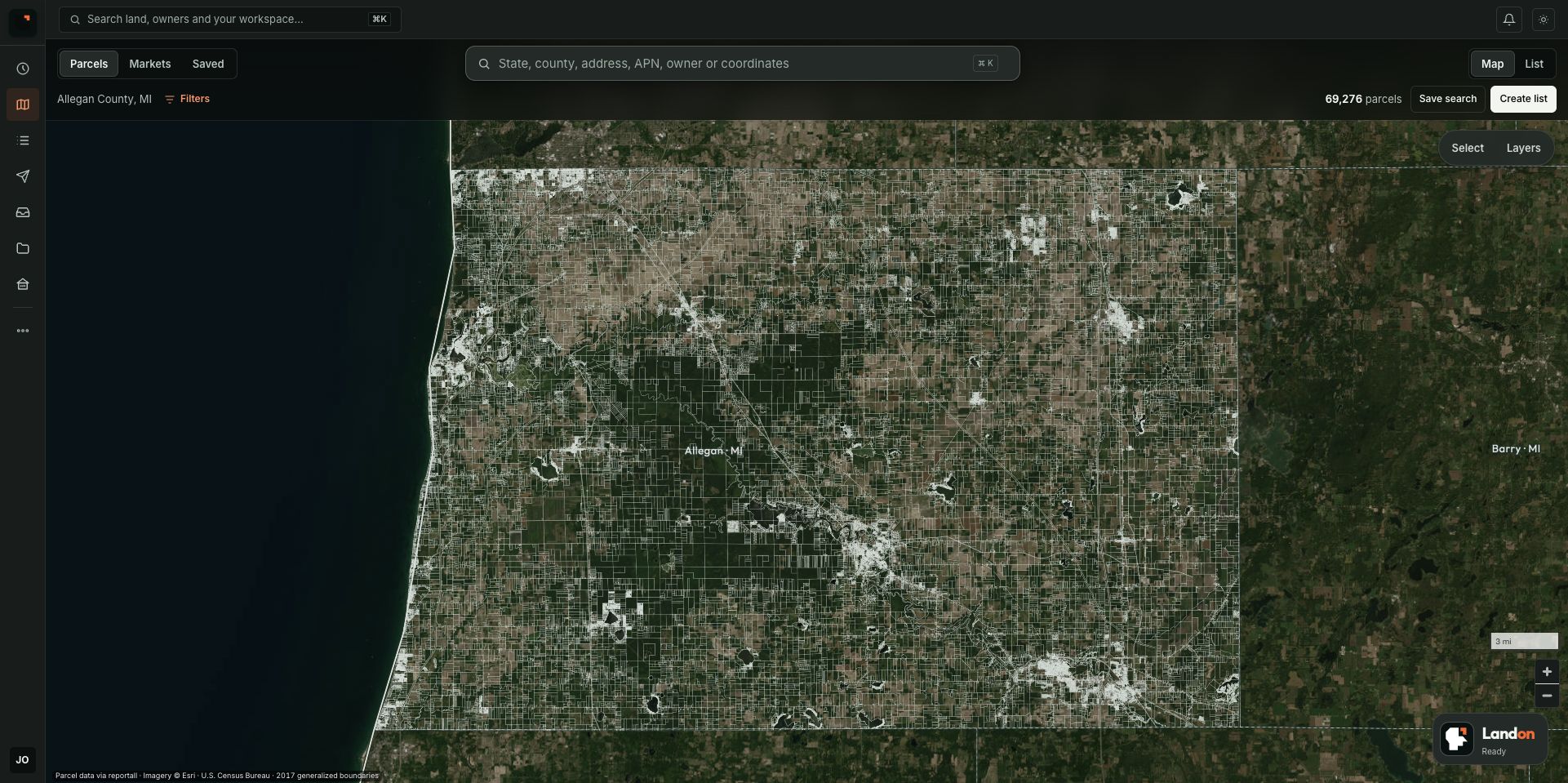
Week 2: Work on the questions that matter
Focus on access, intended use, site conditions, utilities, and title and tax questions. Do not give each item the same amount of time just to complete a checklist. Start with the issue most likely to make the plan unworkable.
Write specific requests. “Can I build here?” may be too vague. Describe the parcel and proposed use, then ask which rules, approvals, and site information apply.
Record who answered, when, and what the answer actually covered. If an office refers you elsewhere, that referral is your next task.
Finish the week with: fewer unknowns, or a documented reason to stop researching that parcel.
LandOSMap · Parcel boundaries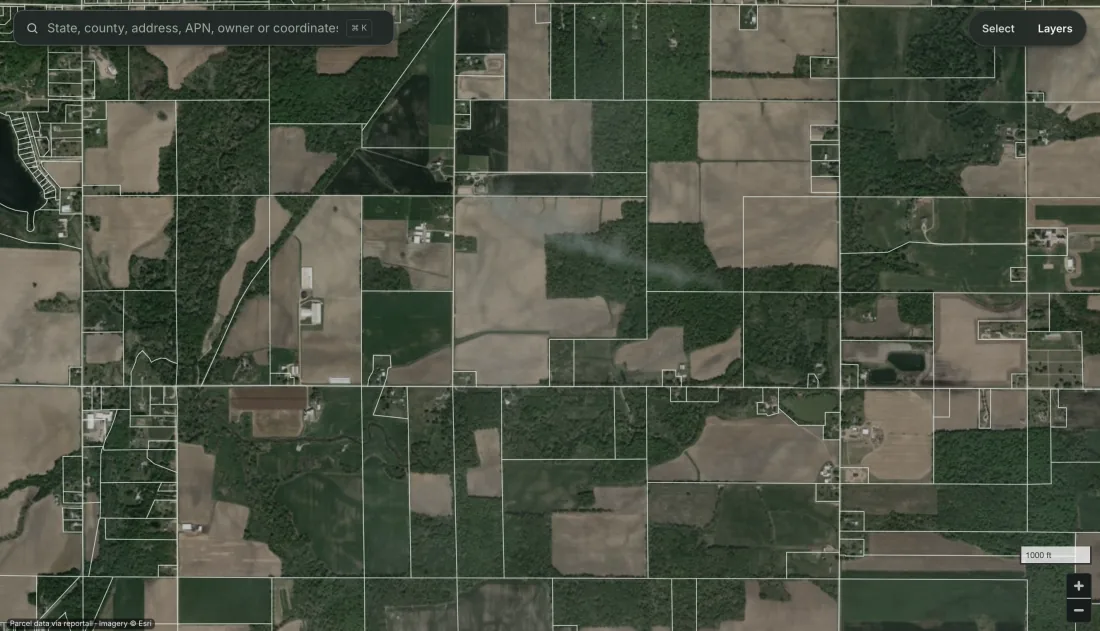
Week 3: Put the numbers under pressure
Find relevant completed sales. Note the differences that could affect what a buyer would pay. Add the costs you have identified and mark the amounts you still need to quote.
Run a lower-sale-price scenario. Add a longer holding period. Ask which assumption has the weakest support. A positive result that depends on an unsupported resale price is not much of a conclusion.
Our worked example shows why a promising subtraction result can still leave a parcel on hold.
Finish the week with: a transparent model and a list of assumptions that could change it.
LandOSCalculator · Training example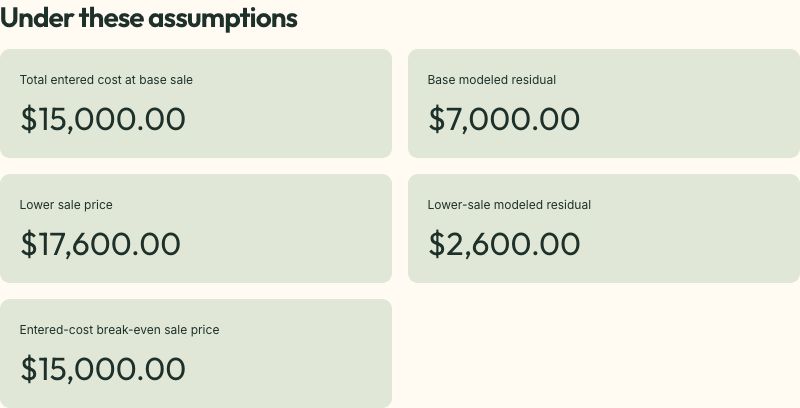
Week 4: Review your work and repeat
Write a one-page review. Ask someone with relevant experience to challenge the evidence, missing costs, and intended use. Record the questions they raise.
Then review a second parcel using the same structure. Notice what you can reuse and what needs a new answer. Two parcels in the same county can still have different jurisdictions, access, site conditions, and restrictions.
Finish the week with: a repeatable research routine, not a promise to buy.
LandOSLists · Organize your researchKeep the routine small enough to use
Set aside two research sessions and one follow-up session each week. Batch your unanswered questions so you are not rereading the same listing every night. End each session with a next action.
You will need money for a purchase and may incur costs before a transaction. Decide what you can afford to spend learning and investigating before ordering paid work. Do not mistake the ability to browse parcels for the ability to fund a business.
LandOS brings parcel research and deal work into one place as you build that routine. Start with a manageable question. Keep the evidence. Make the next decision.
New to the process? Read how to buy land first.