Want to learn how to buy land? Start with one parcel.
 LandOSMap · Parcel boundaries
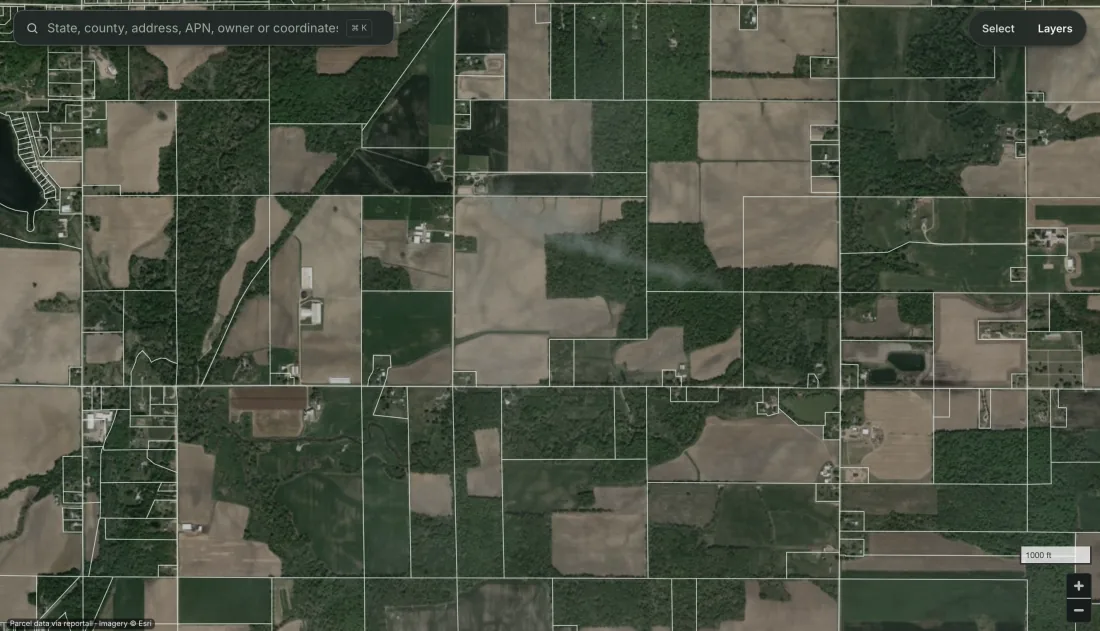
You do not need to understand every land strategy before you begin learning. You need a property to study, a reason someone would want it, and a way to separate facts from guesses.
Your first goal is a clear decision about one parcel. It might be worth further work. It might be an easy pass. Both outcomes teach you something useful before you put money at risk.
1. Decide what the land is for
Start with an actual use: a home, recreation, farming, or a purchase for eventual resale. Each creates different research questions.
If resale is the plan, describe the likely buyer and what that person would need. “Someone will want it” is not enough. A buyer who wants to build will ask different questions from someone looking for recreational space.
You can change your plan as you learn. Write the first version down so you know which assumptions changed.
2. Make sure you are researching the right property
Find the parcel identifier and compare the listing with official records. Keep the acreage, jurisdiction, source, and date together. If records disagree, record the discrepancy.
For a local starting point, follow the Allegan County land research guide. It connects the initial map search to the offices responsible for the next questions.
LandOSMap · Parcel boundaries3. Investigate the questions that could stop the deal
Can you legally and physically reach the property? Does the intended use fit the applicable rules? What do title and recorded restrictions show? Can the site support the services the use requires?
You do not need to answer these alone. You do need to know which answer is missing and who can help establish it.
Use four plain labels in your notes: Unknown, Needs verification, Verified, and Issue found. “Verified” should describe a specific finding and its source. It should never mean “the property seems fine.”
For example, confirming the parcel ID does not confirm access. A seller saying “utilities nearby” is not a connection quote.
LandOSMap · Terrain view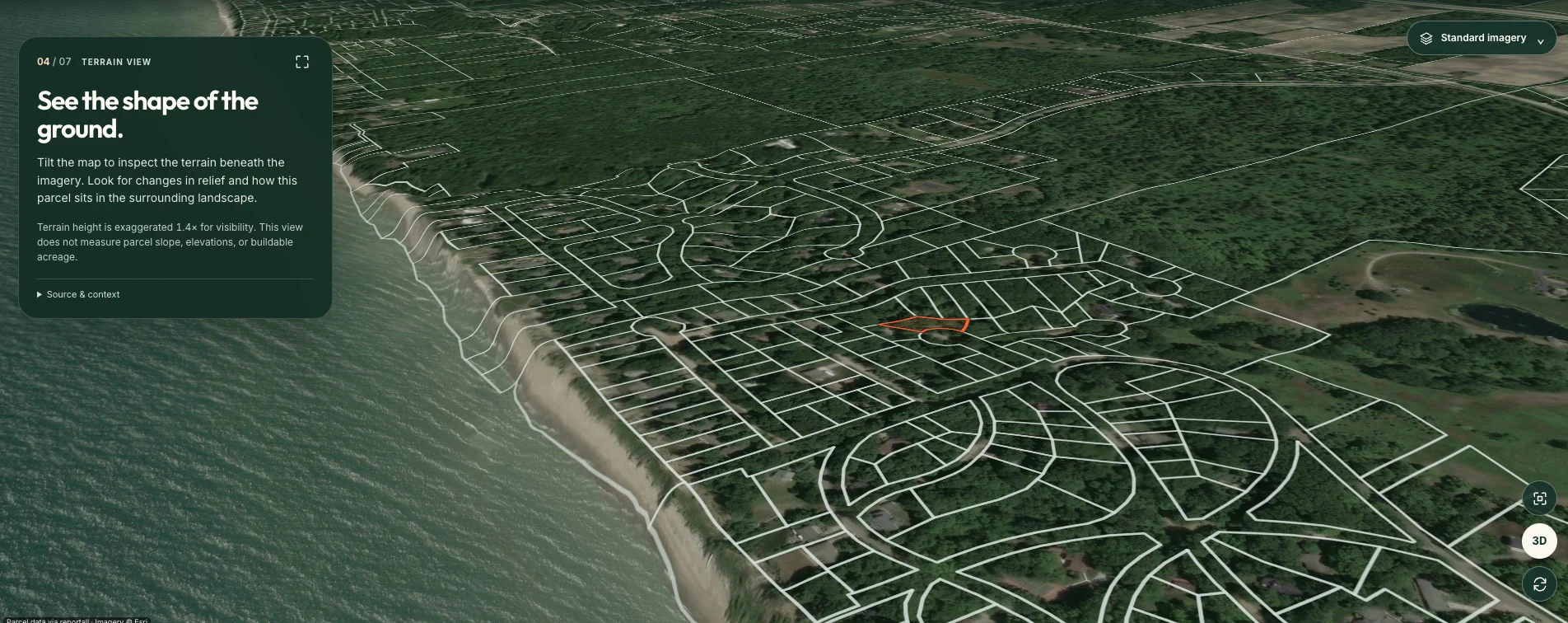
4. Research the price and the costs
Find relevant completed sales and document the differences. Keep listings separate from completed transactions. An asking price tells you what someone wants, not what a buyer paid.
Then estimate the full work required by your plan. Include acquisition, investigation, closing, holding, preparation, financing where applicable, and selling costs. Mark estimates as estimates. Keep missing amounts visible.
Use the land deal calculator to see how price and costs affect the arithmetic. It cannot tell you whether the land is suitable or what it will sell for.
LandOSCalculator · Training example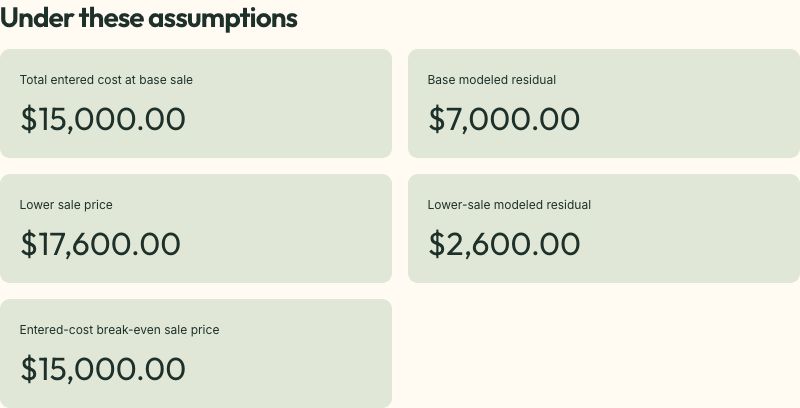
5. Write a short purchase review
Before discussing a commitment, write five sentences:
- I am considering this parcel for this use.
- These sources support the following findings.
- These questions remain unresolved.
- These are my price and cost assumptions.
- I will continue only if these conditions are met.
A review full of unresolved questions is a research task. Treat it that way. Have qualified professionals guide transaction documents, title, and closing questions rather than treating this article as a purchase procedure.
LandOSLists · Organize your research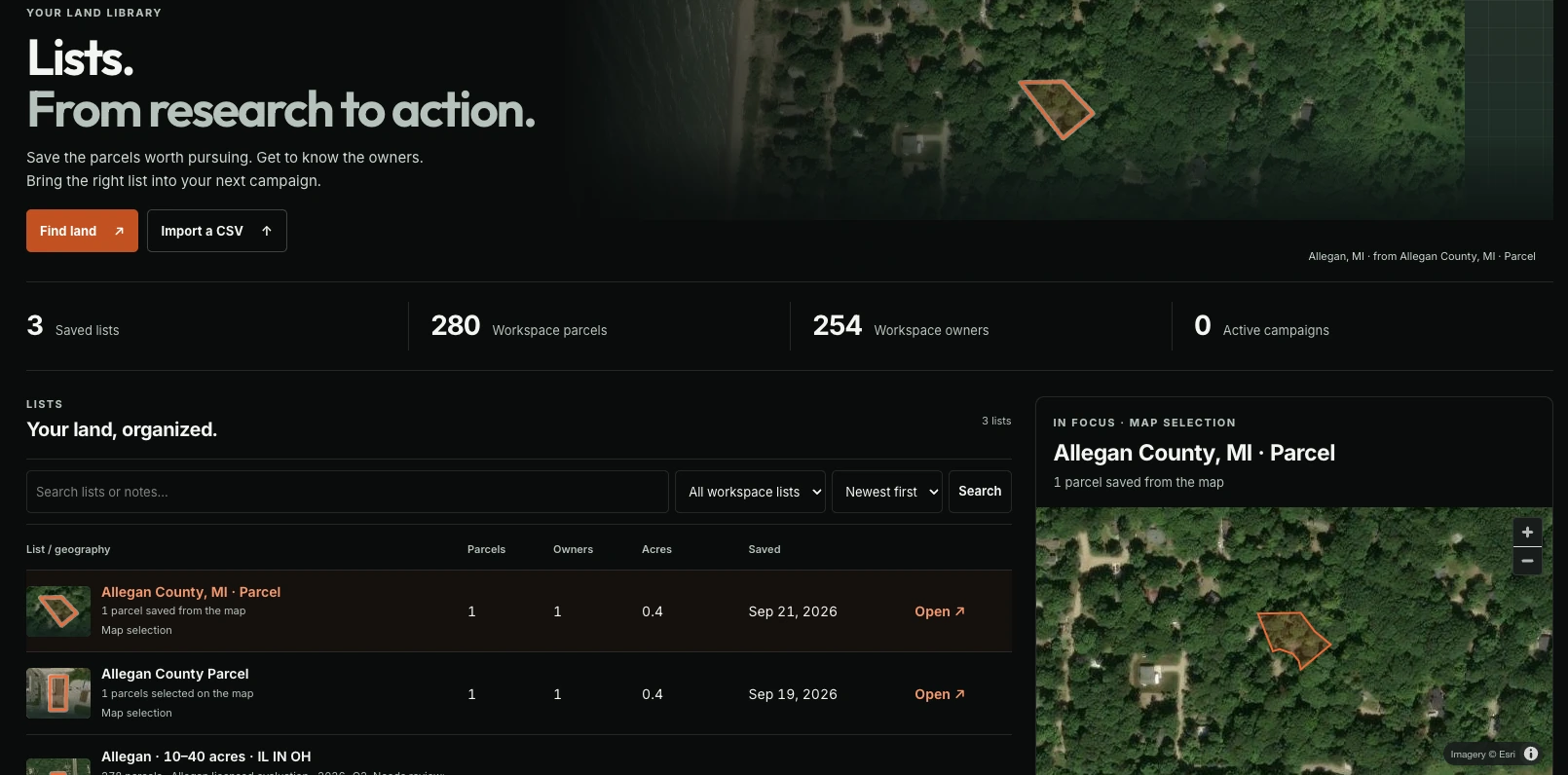
Your first assignment
Pick one parcel. Spend your first session establishing its identity, jurisdiction, and intended use. End with the next question and the office or professional who can answer it.
Do not measure that session by how many listings you opened. Measure it by whether your understanding became more specific.
Use LandOS to organize the parcel research, follow-up work, and potential deal as your review develops.
Next: Build a land research routine around your schedule or work through a hypothetical deal.